This page is the hub for Greece tours on the site: day trips, boat days and bus tours, sorted by region, each with its own tour page. Pick the region that matches your trip, then open the tour for the full details.
Read on for the regions, Athens, the Peloponnese, Meteora, the Cyclades, Crete and the Dodecanese, boat days, day trips versus multi-day tours, transport, seasons, packing, how to choose, and answers to the traveller questions that come up.
What are Greece tours, and what do they cover?
Greece tours are organised trips that sell transport, a tour guide and planned stops together as one booking. They reach ancient sites, cities and islands, and they run for one day or for a week or more.
Tour operators build each trip, and travel agents sell it. In its plain form, a package tour sells transport and accommodation together, and activities or outings can be added. A tour guide then leads the visitors and explains the cultural and natural heritage of each area.
Greece tours come in three shapes: day trips, multi-day tours and boat days. A day trip fills one day. A multi-day tour follows a route across two or more days. A combination trip links multiple destinations in one bundled itinerary. A boat day takes you out on the water to the islands.
Greece tours on this site are one-day tours only: day trips, boat days, bus tours and city tickets. Each tour post covers one tour in detail. One operator says entrance fees, meals and extra activities can be arranged on request. So check what each tour page includes.
Greece is a major tourist destination in Europe, and tourism here is ancient. Roman visitors travelled to Athens, Corinth and Thebes, the centres of Greek philosophy and science. Today the country has UNESCO World Heritage Sites, archaeological sites all around it and a long coastline. That gives Greece tours plenty to show.
How long do Greece tours last?
Operator pages list Greece tours that last from half a day up to 27 days. They sort them into half-day tours, full-day tours, tours of 2 or 3 days, week-long tours and longer routes.
Half-day Greece tours are the shortest, and one operator keeps a separate half-day group in its tour list. Another operator lists a city tour in Athens at 5 hours. A third operator says one full day gives enough time for the main attractions of Athens.
Multi-day Greece tours start at 2 or 3 days. Operators write the nights beside the days, such as 7 days and 6 nights. One operator describes island-hopping tours with a swim in the sea one day and ancient ruins the next. These examples from the operator pages show the range:
- 2 days and 1 night: Athens to Santorini.
- 3 days: Olympia, Delphi and Meteora from Athens.
- 4 days: mainland Greece with Meteora.
- 7 days: Athens, Mykonos and Santorini.
- 9 days: Athens, Mykonos, Santorini and Crete.
- 12 days: Athens, Delphi, Meteora, Santorini and Crete.
The longest route in the sources runs 27 days. One operator says the ideal length depends on your plans and interests. It says 3 to 7 days lets you explore more than one region. With 8 to 10 days or more, you can combine Athens, classical sites and selected islands.
Boat tours cover the range too, as one operator lists a 1-week sailing tour in the Saronic or Cycladic islands. Next to those, the tours on this site sit at the short end of Greece tours. Each tour post gives the timing of that tour. Read the post of a tour for its details.
Which regions do Greece tours reach?
The map of Greece tours has a land half and a sea half. On land, they run through Attica, the Peloponnese, Central Greece and Macedonia. Across the sea, they reach the Cyclades, the Dodecanese, Crete, the Ionian Islands and the Saronic Islands.
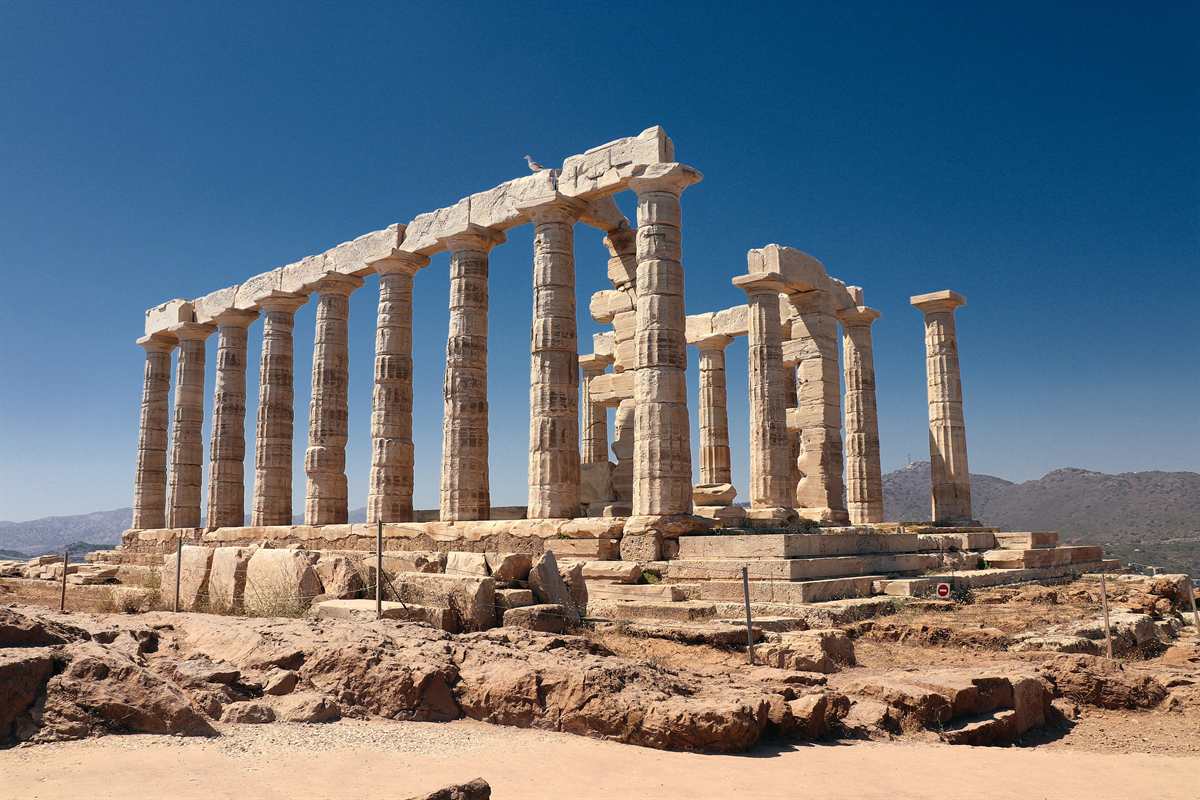
Attica is a peninsula that projects into the Aegean Sea and holds Athens. Sounion, at its eastern tip, has the remains of a temple to Poseidon. The Peloponnese is a peninsula in the south, joined to the mainland by the Isthmus of Corinth. Central Greece is the traditional region with the largest population. Macedonia, in northern Greece, is highly mountainous.
Greece tours also sail to the Cyclades. The group is the home of Santorini and Milos. The Dodecanese lie close to Anatolia. Of the 15 larger and 150 smaller islands there, only 26 are inhabited.
Crete forms the southernmost region of Greece and lies about 100 kilometres south of the Peloponnese. Among the 13 regions of Greece, the Ionian Islands, out in the Ionian Sea, are the smallest by area. The Saronic Islands, named after the Saronic Gulf, lie just off the mainland, and Salamis is the largest of them.
Cyprus is a separate country, not a region of Greece. This island nation sits in the eastern Mediterranean, and its capital is Nicosia. A trip there counts as separate from Greece tours. The site still lists one Cyprus tour, the Ayia Napa quad bike safari. It uses quads or buggies on tracks near Cape Greco and Protaras.
What do Greece tours show in Athens?
Greece tours in Athens head for the Acropolis, the ancient citadel that crowns a rocky outcrop above the city. Athens is Greece’s capital and its biggest city, and the Parthenon rises among the ruins on that hill.
Athens is the southernmost capital of mainland Europe, and its recorded history covers over 3,400 years. Classical Athens was a centre of democracy, the arts and philosophy. Athens International Airport is the largest in Greece and serves the city and Attica. That makes the capital a natural place to start.
The Acropolis stands on a rock that reaches 150 metres above sea level. Pericles coordinated the building of the Parthenon and nearby structures in the fifth century BC. Greece tours of the hill include the Acropolis ticket with audio guide. It covers the entry ticket and a phone audio app.
The Acropolis guided tour pairs a guided walk on the hill with the galleries of the Acropolis Museum. The museum holds sculpture fragments from the old temple of Athena that stood on the hill. Elsewhere in the city stand the Temple of Olympian Zeus, the Kerameikos cemetery and the Ancient Agora.
For a look across the city, Greece tours add Athens hop on hop off bus. This open-top network runs three routes. It starts at Syntagma Square, which is the city’s central square, and also serves Piraeus and the coast. The square faces the Old Royal Palace, which now houses the Greek Parliament.
What do Greece tours show in the Peloponnese and central Greece?
Greece tours in the Peloponnese and central Greece visit the classical sites. Mycenae, Epidaurus, Nafplio and Olympia sit in the south, and Delphi lies in central Greece. Together they cover a Bronze Age citadel, a healing sanctuary, the ancient Olympic Games and an oracle.
Mainland Greece ends in a peninsula, the Peloponnese, at its southern tip. A land bridge, the Isthmus of Corinth, connects it to the central part of the country. The Corinth Canal was built at that isthmus. Mycenae lies roughly 120 kilometres to the south-west of Athens, so Greece tours from Athens reach it.
The ruins of Mycenae are in Argolis, close to Mykines. Its military stronghold dominated much of southern Greece, plus Crete and the Cyclades. The Mycenaean age of Greek history is named after this place. Among its landmarks are the Treasury of Atreus and the Lion Gate.
Greece tours stop at Epidaurus for the sanctuary of Asclepius, where ill people once hoped to be cured. Its ancient theatre is the work of Polykleitos the Younger, from the 4th century BC. A crowd of up to 14,000 can sit there, and dramatic performances are staged there again today.
Nafplio is a coastal city by the Argolic Gulf. The modern Greek state began with Nafplio as its first official capital. The Mycenae, Epidaurus and Nafplio day trip runs from Athens in one day and takes in the Corinth Canal.
Greece tours of the region add two more classical sites. Every four years, Olympia in the western Peloponnese hosted the ancient Olympic Games. The sacred precinct of Delphi occupies a slope of Mount Parnassus. People across the ancient world asked the Pythia, the oracle of Delphi, about important decisions.
What does Meteora add to Greece tours?
Rock pillars topped by Eastern Orthodox monasteries are what Meteora brings to Greece tours. The site lies in Thessaly, in northwestern Greece. UNESCO’s World Heritage List includes it because of its architecture and its religious and cultural role.
Greece tours at Meteora look at pillars of sandstone and conglomerate. Earth movements pushed the seabed upward about 60 million years ago. Weathering by wind, water and extreme temperatures then shaped the pillars. Meteora stands in Trikala, a regional unit of Thessaly. In Greek, the name means “lofty” or “elevated”.
The 24 monasteries on the pillars date mainly to the later part of the 14th century. Four of them are active monasteries open to visitors: Varlaam, Great Meteoron, Saint Stephen and Holy Trinity. Nuns run Saint Stephen as a convent.
Hermit monks were the first documented residents once the Neolithic Era had ended. They made their homes in rock hollows and fissures. Access to the top once meant removable ladders or hoisting ropes. Steps cut into the rock now make the climb much simpler.
Meteora lies between Kalabaka, a town, and Kastraki, a village, with the Pindus Mountains close by. Greece tours to Meteora start in Athens or in Thessaloniki. The Meteora day trip from Athens covers the drive, the monasteries, the hermit caves and sunset.
Thessaloniki is the largest city in Northern Greece and ranks second in the country. The Meteora day trip from Thessaloniki takes the route from the northern city through Kalabaka to the monasteries. Greece tours from this northern base reach the same monasteries.
What do island Greece tours show in the Cyclades?
Boat days carry Greece tours around the Cyclades, a ring of Aegean islands. Two of the islands, Santorini and Milos, are volcanic. Their days on the water show a flooded caldera, a crater, hot springs and sea caves.
Southeast of the Greek mainland, the Cyclades scatter across the Aegean. Delos, a sacred island, sits at the centre of the ring that gave the group its name. The group counts roughly 220 islands, and Naxos is the largest. Greece tours on this site cover the group with three boat days, two on Santorini and one on Milos.
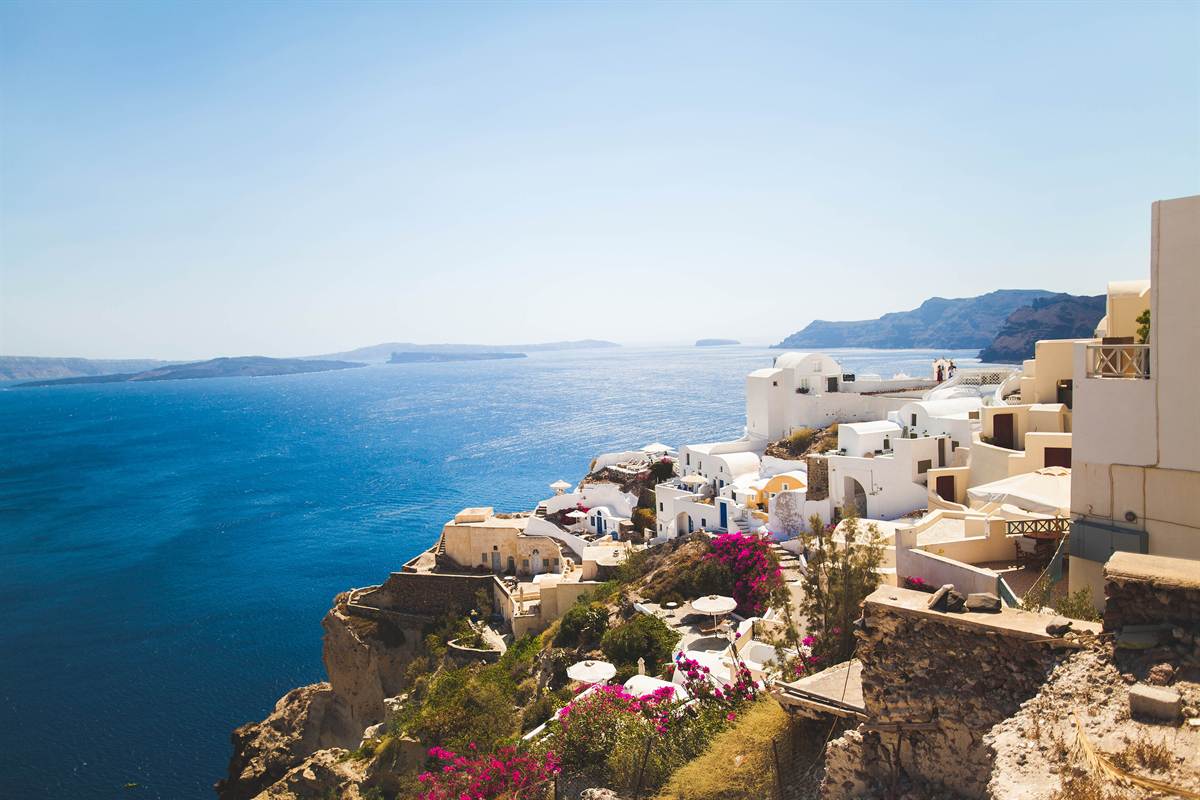
Santorini marks the southern end of the group, roughly 200 km from the mainland. The caldera is largely flooded, a basin about 12 km long and 7 km wide. Steep walls, 300 m tall, rise on three sides. The Santorini catamaran cruise sails across it with stops, a meal and drinks on board.
Greece tours land on Nea Kameni, a small volcanic island at the heart of the caldera. Visitors walk a gravel path up to its crater, which is 130 m high. The Santorini volcano and hot springs tour sets out by boat from the old port of Fira. It includes the crater walk and a hot springs swim.
Milos, a volcanic island, closes the group in the south-west, and its harbour town is Adamas. Greece tours here include the Milos sailboat cruise, with swim stops and sea caves around Kleftiko Bay.
What do Greece tours show in Crete and the Dodecanese?
Greece tours across Crete and the Dodecanese show Venetian forts, a lagoon, a monastery, an acropolis and a volcano crater. Boats and one bus reach every sight, and each one has its own day trip.
Crete, the largest Greek island, is 260 km long from west to east. A mountain range crosses it along the same line. Heraklion, the capital, lies on the north shore. This site’s Greece tours reach two coasts of Crete, the east and the north-west.
East of Heraklion lies Agios Nikolaos, a coastal town on Crete. Spinalonga is a small island in the Gulf of Elounda. Venetians fortified it, and in the early twentieth century it became a leper colony. Our Agios Nikolaos and Spinalonga day trip covers the town, a boat across the bay and an island walk.
The Balos lagoon lies between the north-western coast of Crete and the island of Imeri Gramvousa. A Venetian fort stands in ruins on that island. Greece tours on Crete include a sailing day to both places. Our Balos and Gramvousa catamaran trip pairs the fort with a swim at the lagoon.
The Dodecanese, whose name means twelve islands, lie in the southeastern Aegean Sea. Rhodes is the largest of them. Greece tours in the group start from Rhodes and Kos. Symi lies roughly 24 km north of Rhodes. Our Symi day trip from Rhodes takes the boat to Gialos harbour, the Panormitis monastery and St George Bay.
Rhodes city lies about 40 km north of Lindos, a fishing village on the island’s eastern shore. An acropolis rises above it, with a Doric temple of Athena. Rhodes also gives Greece tours a bus day. Our Lindos and Seven Springs bus tour covers the springs, a tunnel, a forest and the village.
Nisyros, lying between Kos and Tilos, is a volcanic island of roughly round shape, about 8 km wide. Stefanos is the largest crater of its volcano, which is active but not erupting. Nisyros shares a volcanic arc with Santorini and Milos. Our Nisyros island day trip from Kos goes by boat from Kardamena to the crater, Mandraki and Nikia.
How do boat days fit into Greece tours?
Boat days put the sea at the centre of Greece tours. The trip lasts one day and runs on a cruise boat, a sailing boat or a catamaran. It stops at islands near the starting port.
A sailing boat is driven partly or entirely by sails. A catamaran has two matching hulls side by side, and the wide gap between them resists rolling. It also draws less water than a boat with one hull. Sailing trips in the Ionian and Cycladic islands stop for swims off the side of the boat.
Boat days on Greece tours from Athens head for the Saronic Islands. They lie in the gulf that gives them their name, near the mainland, and ferries from Piraeus serve them regularly. Piraeus, the harbour of Athens, lies eight kilometres to the southwest of the city centre. Aegina, Poros, Agistri and Salamis are the four main inhabited islands.
Our Hydra, Poros and Aegina day cruise goes from Athens to three of these islands in one day. Aegina lies 27 kilometres from Athens and is known for its pistachios. A bridge links the two islands that make up Poros. Hydra bans wheeled vehicles, and its only motor vehicles are rubbish trucks.
Greece tours by boat also start from Corfu, one of the Ionian Islands. Two medieval castles enclose its capital. Paxos lies just south of Corfu, about 15 kilometres from its southern tip. Its west coast has chalky cliffs with blue caves. Our Paxos and Antipaxos cruise is a boat day from Corfu to Paxos and its neighbour.
How do day trips differ from multi-day Greece tours?
Day trips fit into one day and start from a base city such as Athens. Multi-day Greece tours link different places in one planned route, with hotel nights and moves between the stops.
Tour names on operator pages show the split. A Delphi day trip from Athens names one destination and one day. A tour listed as two days and one night names its nights, because the traveller sleeps in a hotel. Operators list Cape Sounion, Nafplio and even Mykonos by high-speed ferry as day trips from Athens.
On Greece tours of more than one day, one plan sets the route, the hotels and the moves between places. This form is called a combination trip: different destinations in a single bundled itinerary, with accommodation and transport between them. One listed route through Athens, Mykonos and Santorini names a separate stay in each place.
A multi-day route can put an island swim on one day and ancient ruins on the next. Island hopping features in such tours too. Operators sell them as group, private, semi-private or self-guided packages. Other services, such as a rental car or outings, can join the package.
Among Greece tours, this site lists one-day trips only, from cruises to coach days and city tickets. Each fits into one day, so you stay in one base city. Multi-day tours are a different product, which tour operators sell. Each day trip here has its own post, with the stops and the details of that trip.
How do coaches, ferries and flights work on Greece tours?
Greece tours travel by road on the mainland and by ferry or boat between islands. Planes cover the longest gaps. A day trip needs only one of these, while a multi-day tour links them in a chain.
Coaches carry groups on the mainland, and Greece tours reach the classical sites by road. Motorways are built to higher standards than national roads. National roads vary from fast multi-lane stretches to twisting two-lane ones. The mainland is extremely mountainous. The longest motorway, the Egnatia Odos, links Igoumenitsa in the west with Kipoi on the Turkish border.
Ferries link the islands, so Greece tours that hop from island to island rely on them. Piraeus, the chief port of Greece, belongs to the Athens urban area. Rafina lies 25 kilometres from Athens city centre. It is the second port of Athens. Its ferries sail to southern Euboea and the greater part of the Cyclades.
Greece has 16 international airports. The two biggest by passenger numbers serve Athens and Thessaloniki. Athens International Airport lies east of the capital, between the towns of Koropi and Spata. It replaced the old Ellinikon airport. Heraklion on Crete, Rhodes and Corfu follow as key airports for visitors. Multi-day Greece tours can pair ferry links with domestic flights.
One Greek airline serves 35 domestic destinations all year, from mainland cities to islands. The day trips from Athens, Rhodes and Kos travel by road or by sea instead, so the transport stays simple.
Which season suits Greece tours?
Summer is the peak season for Greece tours, with clear skies, long days and heat. Spring and autumn bring milder weather, and winter suits the mainland sites better than the islands. The right season depends on the tour.
From June to August the days are sunny and dry, with temperatures in the mid to high 30s Celsius. Summer is the peak tourist season, so expect crowds. Athens can get particularly hot, and the urban heat island effect adds to it. The metropolitan area has recorded 48.0 degrees Celsius. On the coast, the sea breeze keeps heatwaves milder.
Strong, dry north winds, called the meltemi, cross the Aegean in summer. They blow between late spring and mid-September, peaking in July and August. They can reach force 7 or 8 and appear under a clear sky without warning. Boat days on Greece tours depend on the sea. In such winds the majority of ferries between islands cannot sail.
Spring and autumn give Greece tours plenty of sunshine with fewer tourists and milder temperatures. April and late spring are the shoulder months before the high season. The weather stays balmy well into October. By the end of that month, ferry services and seasonal businesses on the islands begin to wind down.
Winter is the low season, above all on the islands, where places close until spring. On the mainland, winter brings smaller crowds and comfortable walking temperatures at the ancient sites. Winters are wet, and northern Greece can turn cold, while the south and the islands stay considerably milder. Winter Greece tours fit the mainland sites.
What do you pack for Greece tours?
For Greece tours, pack a water bottle, a hat, sunscreen and comfortable shoes. On boat days, add swimwear and a towel. Operator pages for Greek day trips list these same items, and each group of items below comes with its reason.
Start with your feet. At Meteora, trails and monastery steps can be uneven and steep. One page there wants sturdy shoes with closed toes and a good grip. At Mycenae the ground is also uneven and the paths are steep. Wear shoes you have already walked in.
Next comes sun protection for Greece tours. The Mycenae site offers very little shade, so bring a hat and water. A sailing operator in Milos lists sunscreen, a hat and glasses for the strong Greek sun. A small backpack can also carry a light jacket or sweater, since conditions can change within one day.
Boat days add a swimsuit and a towel, and boat operators list both. The hot springs on Santorini carry iron and sulfur that can stain pale clothing, so one operator suggests dark swimwear. Add your ID and any medicine you take for a full day out.
Greece tours that visit monasteries come with a clothing rule. At Meteora, men and women both cover shoulders and knees. One Meteora page says the entrance has wrap skirts and shawls if needed. Another page suggests a scarf or light jacket. Do not take photos of monks and nuns, or inside churches. Use your camera outdoors.
Charge your phone and carry headphones for an audio guide. Bring a little cash for small purchases, as one Meteora page advises.


How do you choose between Greece tours?
Judge Greece tours by start city, length, transport, group size, what is included and the tour guide’s language. A good tour page answers each point plainly, so you can check them before you book.
Start with where the tour leaves from. A tour page names the departure town and lists the pick-up places. Match the length and the vehicle, bus or boat, to your day. Listings also label Greece tours as private, semi-private, group or self-guided.
Read the page sections, such as what to bring, what is not allowed and know before you go. One Meteora page runs its tour in English only and adds other languages through an audio guide. Treat reviews as opinions, because each one shows how a single traveller felt.
Check the list of what is included. One Acropolis tour page lists entry, a licensed expert guide and earsets after the words “Everything you get”. Ask the operator about anything the list leaves out.
Decide how much free time you want on Greece tours. One Santorini day trip page lets you explore Kamari, Oia and Fira at your own pace. A tour with fixed stops follows the tour guide’s plan instead, so read the stop list.
Book the main sights first. Entry to the Acropolis is timed, so you book the day and the hour in advance. A tour sold without tickets still needs a ticket for a matching time slot. Fix that date, then fit the other Greece tours around it.
What else do travellers ask about Greece tours?
Which Greek islands are the largest, and how big is the island count?
Greece tours can pick from a long island list. Estimates put the count at about 1,200 to 6,000, depending on the smallest size counted. Between 166 and 227 islands are cited as inhabited.
After Crete, the largest by area are Euboea, Lesbos and Rhodes. A strait 60 metres wide, the Euripus, separates Euboea from the mainland. Close to its coast, the Sporades form a small, tight cluster. Lesbos belongs to the North Aegean islands, a loose grouping off the west coast of Turkey.
Which public holidays matter when you plan Greece tours?
Greek law makes every Sunday a public holiday, so check your date against the national days. Fixed days include Independence Day on 25 March, the Dormition on 15 August and Oxi Day on 28 October.
Orthodox Good Friday and Orthodox Easter Monday move each year, because they sit either side of Orthodox Easter. Clean Monday, the day after Orthodox Carnival, also moves. Towns keep local days too, such as a patron saint’s Name Day.
What is a licensed tour guide, and which languages do tour guides use on Greece tours?
A tour guide leads visitors in their chosen language and explains an area’s cultural and natural heritage. A licensed tour guide normally holds a qualification for the area, issued or recognised by the authority. In Europe the qualification is specific to each country.
Tour guides give information at museums and at religious and historical sites. Pages for Greece tours name the language of the tour guide, such as English, Spanish or French. They also list audio in more languages.
What money and plugs do you need for Greece tours?
Greece uses the euro, which replaced the Greek drachma. Sockets are Type C, the European 2-pin, and Type F, the German 2-pin with side clip earth.
What is the Orthodox Church of Greece, and where does it reach?
Churches and monasteries appear as stops on Greece tours, and the Church of Greece counts 541 monasteries. It is an autocephalous Greek Orthodox church, headquartered at the Metropolitan Cathedral of Athens and Petraki Monastery.
Eastern Orthodoxy holds recognition in the Greek Constitution as the prevailing religion. The archbishop of Athens and All Greece leads the church, which counts 8 to 10 million members. Crete, the Dodecanese and Mount Athos lie outside its territory.